Introducing Novee Agentic Fix: Validation and Remediation in One Loop
Novee Agentic Fix turns validated exploits into verified fixes by integrating with AI coding agents like Claude, Codex, Copilot, Cursor, and Devin — closing the gap between vulnerability discovery and remediation in one continuous loop.
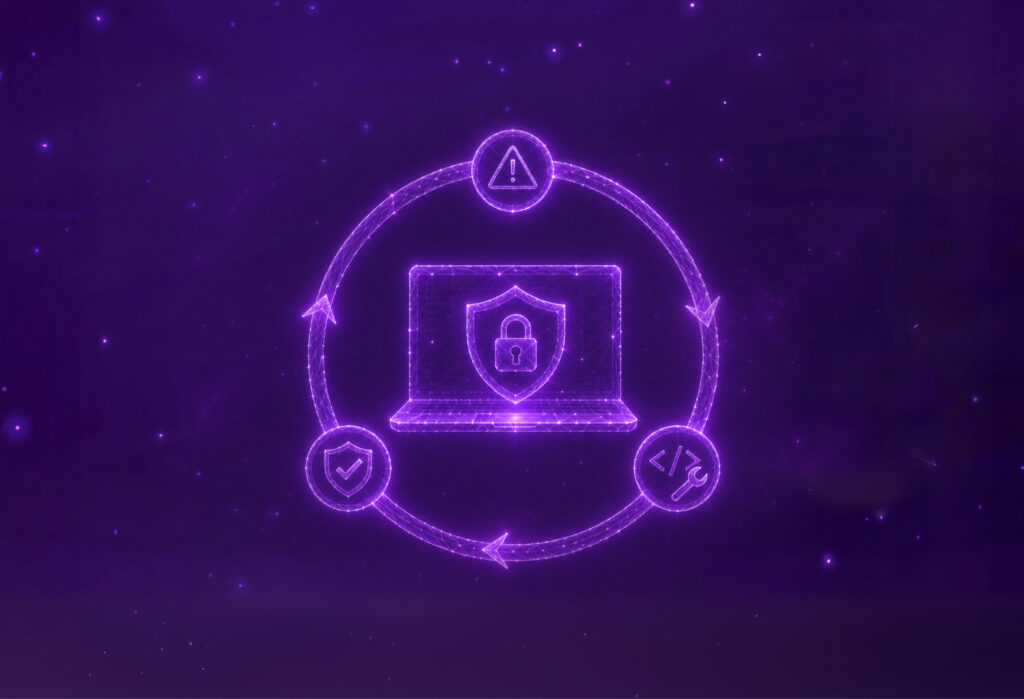
AI coding agents like Claude, Codex, Copilot, and Cursor have become standard infrastructure in modern engineering organizations. They already write, review, and refactor production code every day. Unfortunately, that also means AI helps draft the exploitable vulnerabilities that keep security teams backlogged with remediation requests; continuous pentesting and autonomous pentesting may have compressed vulnerability discovery timelines from quarters to hours, but findings still have to be triaged, assigned, explained to engineering, contextualized, patched, reviewed, and re-tested.
Pointing AI tools at the remediation queue is the obvious solution to closing the remediation window. What’s been missing is a system that gives them validated instructions, handles orchestration, and verifies the fix actually worked.
That’s why we’re introducing Agentic Fix, a new Novee capability that turns validated exploits into implemented, verified fixes by integrating with the AI coding agents engineering teams already use.
Agentic Remediation, Validated End to End
Agentic Fix extends the Novee platform, to leverage the AI coding assistants developers are already using. When Novee identifies an issue, users can hand it off directly to their coding agent of choice. The agent receives a detailed remediation brief built from the same context Novee used to discover the exploit – entry point, affected code paths, attack vector, and specific guidance on what needs to change. It opens a pull request against the repository. Novee then re-assesses the affected asset to confirm the fix holds up against the original attack.
The flow:
- Novee runs an autonomous pentest and generates a detailed, validated issue
- The Novee user clicks Fix with and selects their AI coding assistant (compatible with Claude, Codex, Copilot, Devin, and Cursor)
- Novee generates a detailed GitHub issue with remediation guidance
- The AI coding agent creates a fix and opens a PR
- Novee re-assesses to confirm the vulnerability is resolved
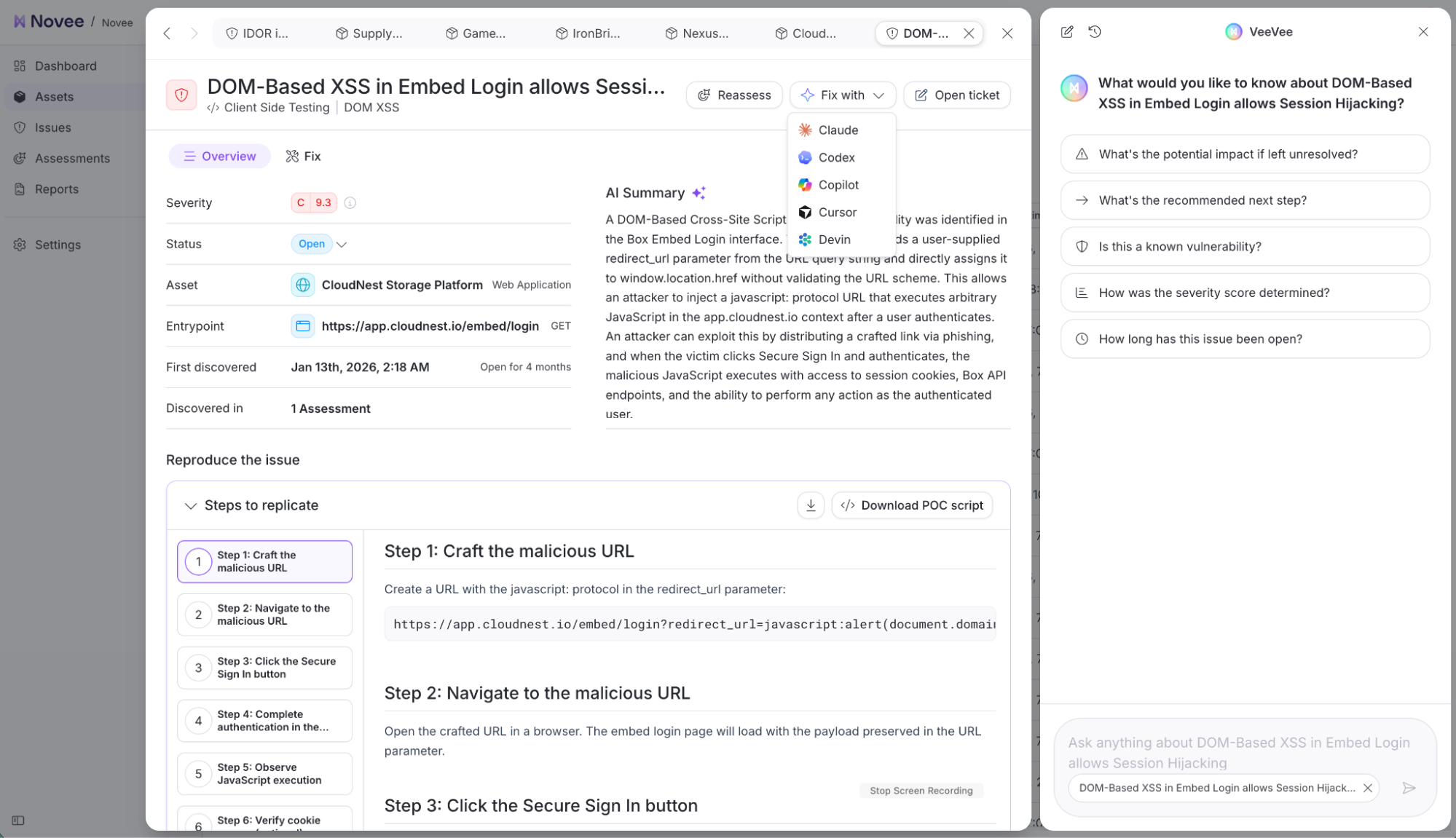
There’s no workflow to replace. Agentic Fix plugs into the tooling engineering teams already trust, which means fewer handoffs, less friction, and faster resolution.
Agentic Fix integrates natively with the major AI coding agents, including:
- Claude
- Codex
- Copilot
- Cursor
- Devin
Security teams can route remediation to whichever agent their engineering counterparts already use. And the remediation guidance Novee produces is grounded in the specific exploit path Novee validated against the specific application being tested. When the coding agent receives that brief, it has what it needs to address the root cause, not just the symptom.
Because Novee automatically re-assesses once the PR lands, teams get something that has been missing from most vulnerability workflows: confirmation that the remediation actually worked.
Attack and Defense in a Single Loop
Novee closes the gap between validating exploitable vulnerabilities and resolving them. The system that runs autonomous security testing against an application is the one that specifies how to fix what it finds, meaning the AI that understood the attack deeply enough to exploit it is the same AI writing the remediation brief.
Fewer incomplete fixes and a shorter window between discovery and resolution. That’s a systemic advantage that goes beyond AI model intelligence.
Defenders have to operate on the same end-to-end timeline as attackers – detect, remediate, and validate continuously, not episodically.
Agentic Fix is how Novee closes the loop. Book a demo to see the flow in action.